Maze Navigation Robot
An autonomous maze robot built on a BBC micro:bit, with a custom pinion gear drivetrain and IR sensors. It finds its way through the maze and reaches the target without anyone steering.
- Role
- Designer & programmer
- Platform
- BBC micro:bit + motorIOBOX
- Tools
- MakeCode, sensors, assembled chassis
- Status
- Built & demonstrated
Problem & goal
Build a robot that can reach a maze target on its own — onboard sensing and logic only, no remote steering.
Constraints
The platform was fixed: BBC micro:bit + motorIOBOX, so processing power, sensors, and I/O were limited. The logic had to stay simple enough to run on that hardware and still survive a physical maze.
Process & decisions
Early research ruled out ultrasonic sensing — it was unreliable in a tight maze — so I switched to IR before building around it. I designed a custom pinion gear drivetrain and spent a lot of time on sensor placement and calibration.
Navigation stayed deliberately simple: wall-following with reactive turns, tuned in MakeCode until wrong turns and wall oscillation stopped.
Result
Out of my whole grade group, it was the only maze robot that worked reliably. Demo video, MakeCode, build photos, and drivetrain CAD are below.
What I learned
On limited hardware, the right sensor mattered more than clever code. Once IR readings were trustworthy, simple logic was enough.
Maze demo
Robot navigating the maze (no audio). Videos stream from Google Drive.
micro:bit code
MakeCode program for micromouse maze navigation — run the simulator, view blocks, or open the full editor.
Photos
Build photos and testing in the maze environment. Swipe, drag, or scroll to browse.
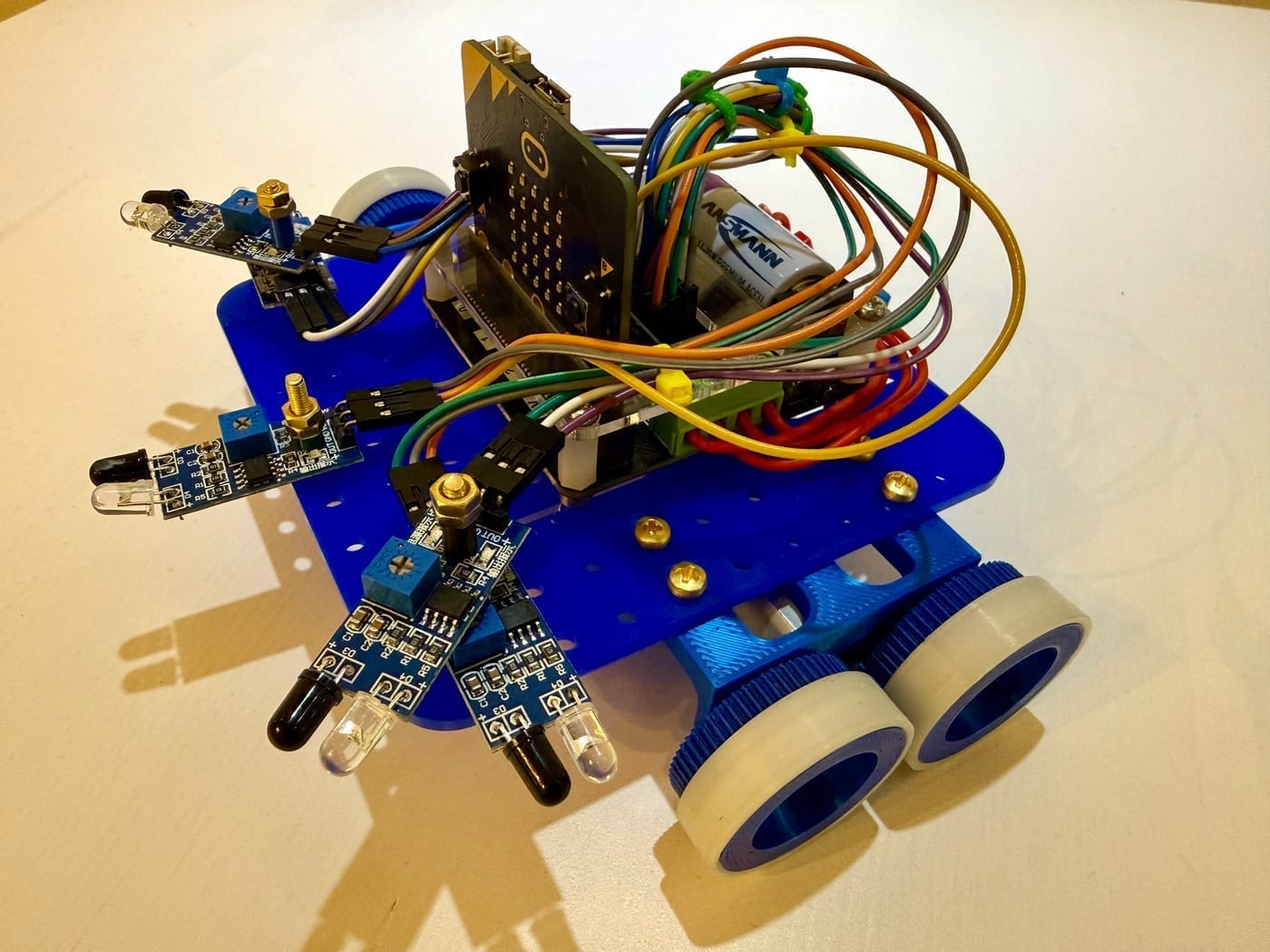
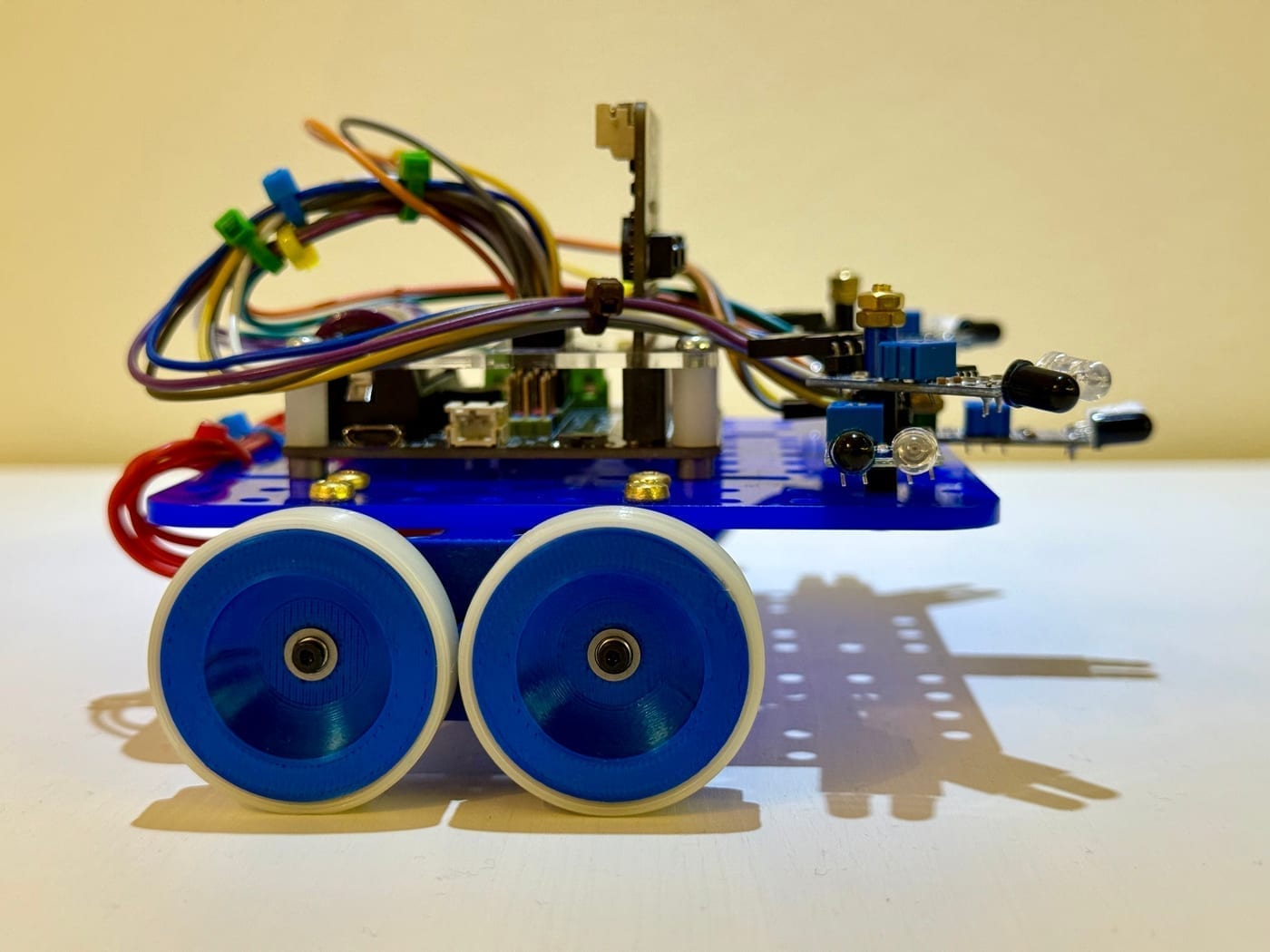
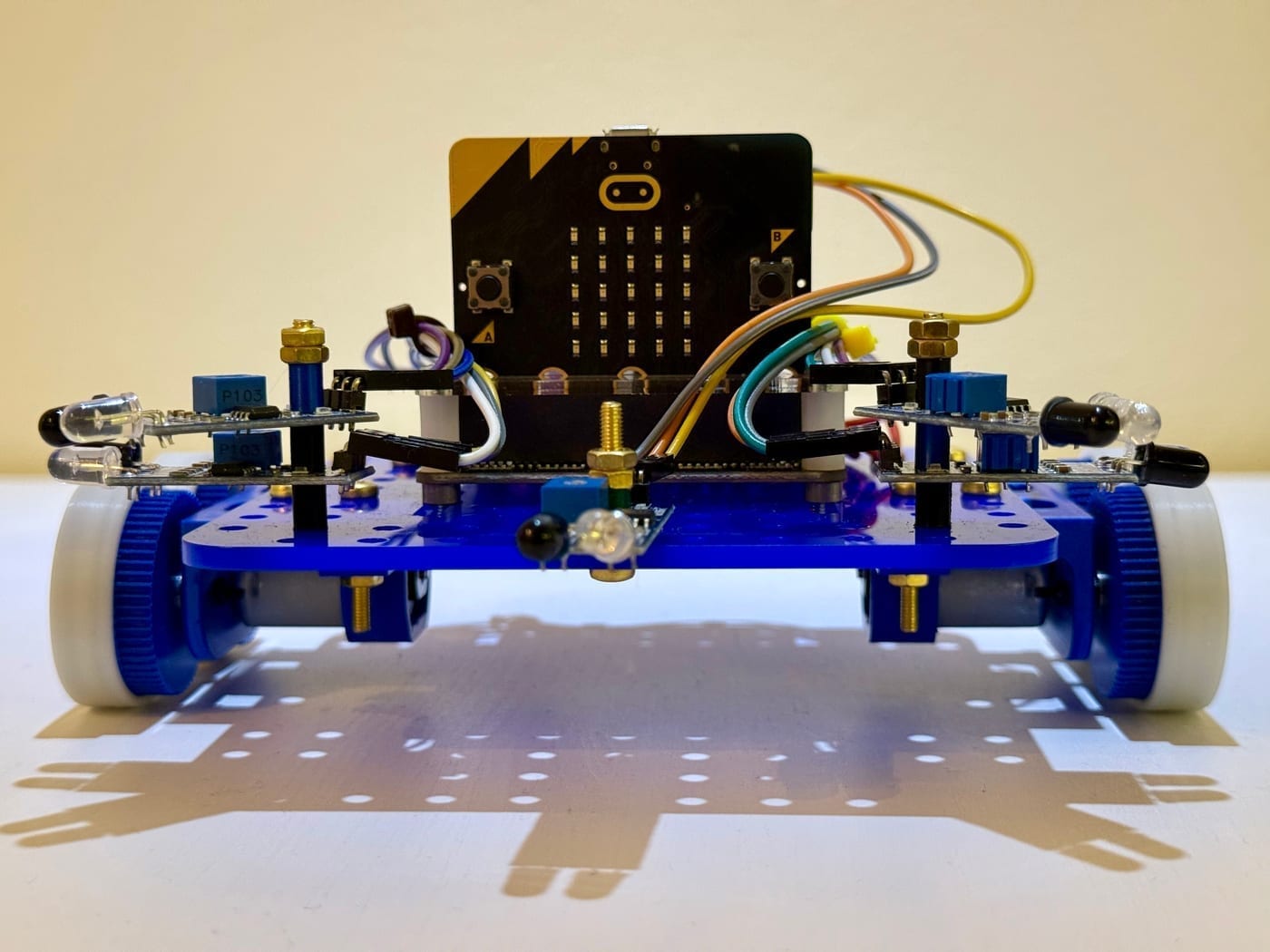
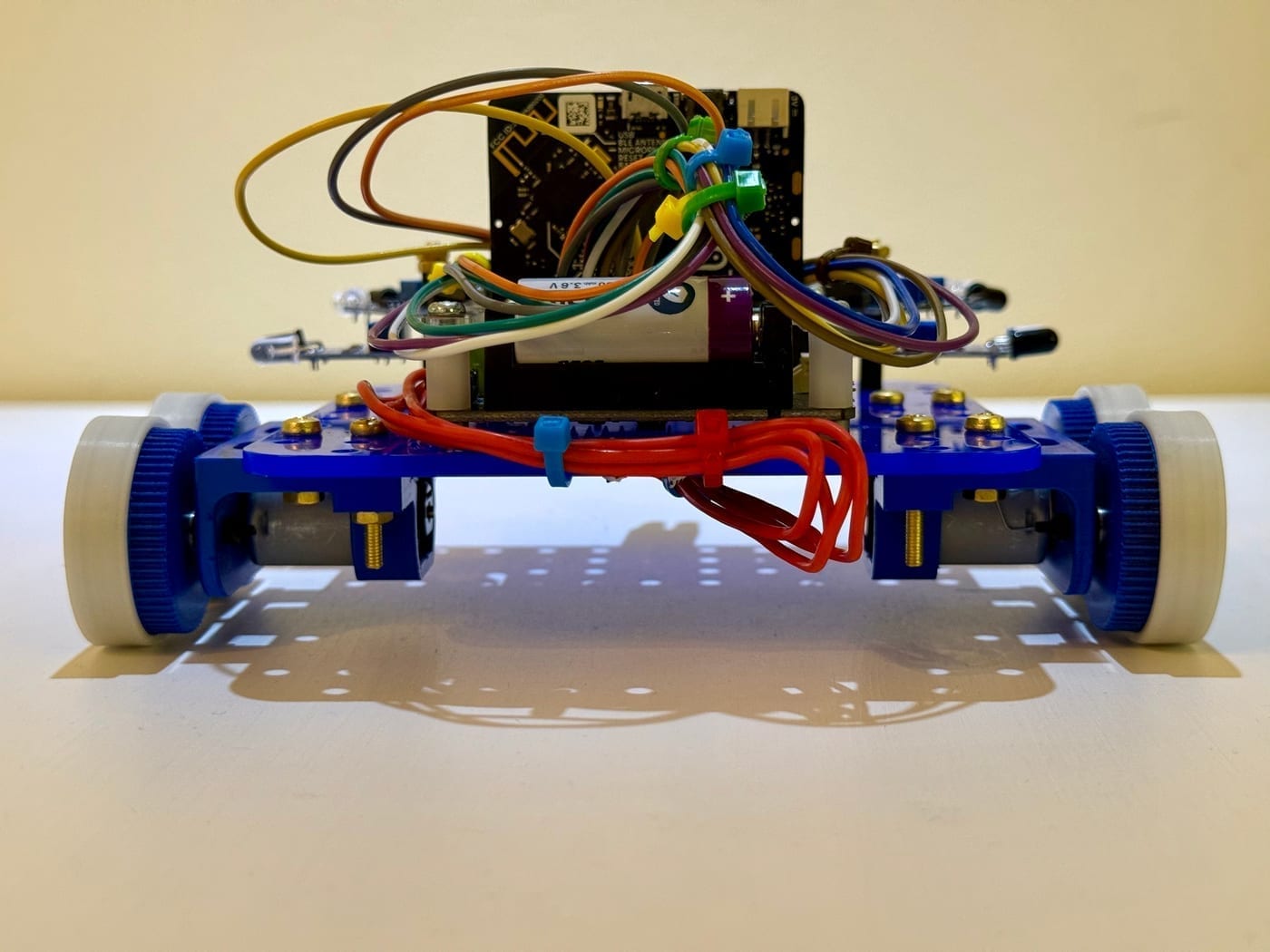
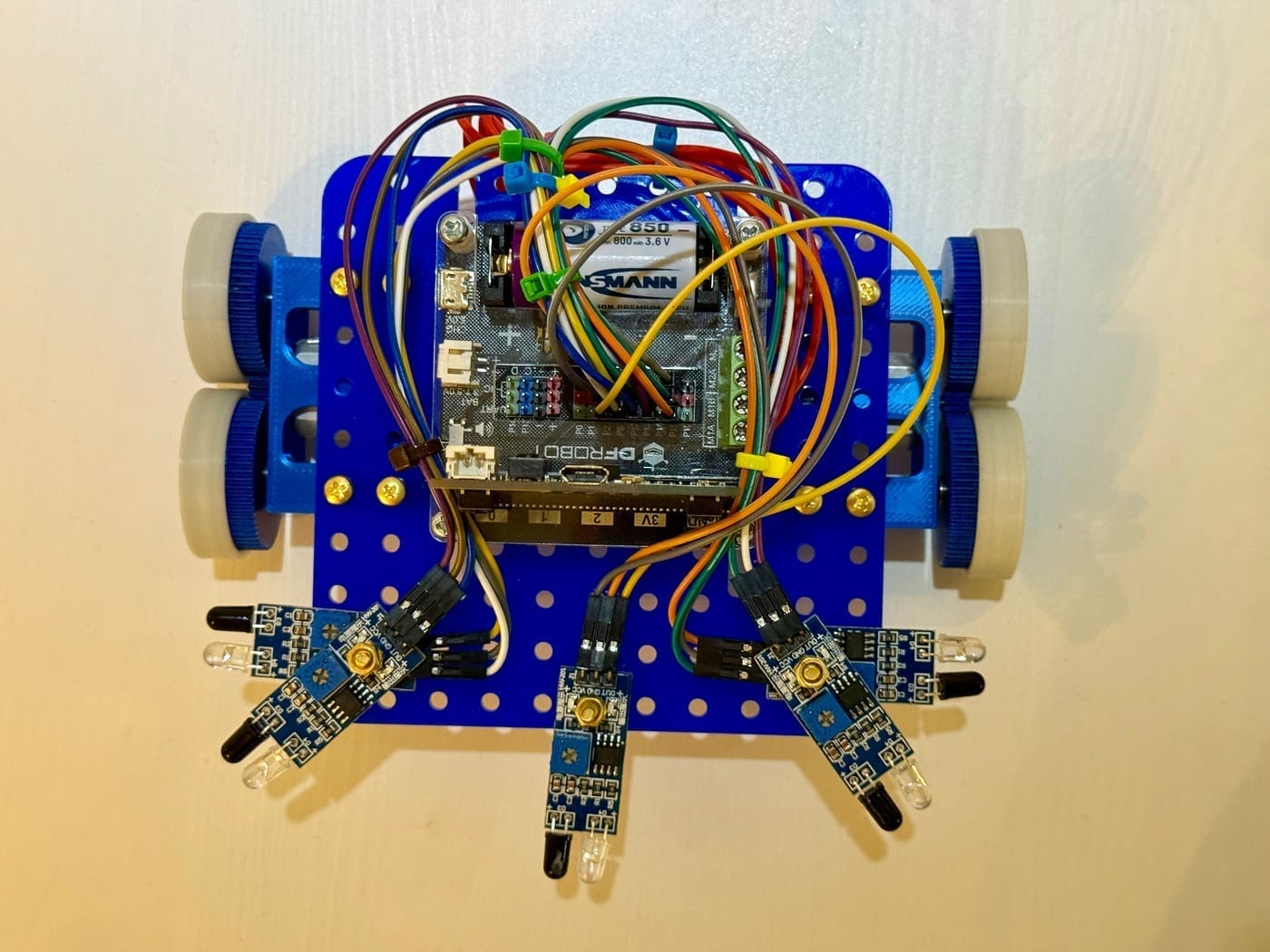
Swipe or drag to browse photos
Micromouse Pinion Gear Drive Train — 3D
Interactive 3D preview of the micromouse pinion gear drive train. Drag to rotate, scroll to zoom, right-drag to pan. STEP download requires an access token.